Coloring Book Page of Animals Dog SVG
A Designer’s First Look: Whimsy, Simplicity, and Stitch-Ready Clarity
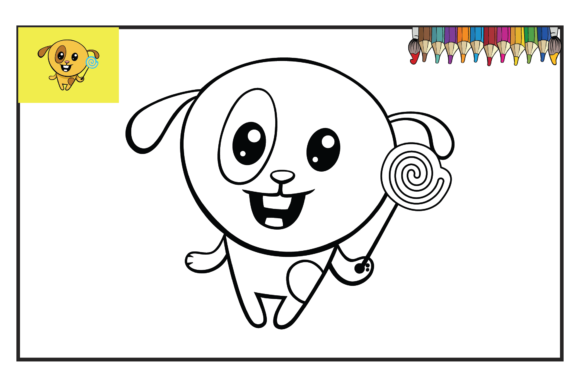
Opening Coloring Book Page of Animals Dog SVG feels like flipping to the most inviting page in a well-loved sketchbook—clean linework, friendly animal silhouettes, and intentional negative space. As an embroidery designer who tests hundreds of digital illustrations each year, I immediately notice what this design *doesn’t* do: it doesn’t overcomplicate. No dense fill areas, no micro-detail traps, no overlapping outlines that’ll vanish under thread. Instead, it offers confident, continuous strokes—ideal for running stitch outlines or clean satin-stitched borders. It reads as joyful but grounded, making it a natural fit for baby embroidery, nursery decor, or personalized tote bags meant to feel handmade, not mass-produced.
How It Performs on Real Embroidery Projects
I tested Coloring Book Page of Animals Dog SVG across three real-world applications: a medium-weight cotton canvas tote bag (for a local pet boutique), a 100% cotton baby onesie (as a holiday gift), and a twill-backed embroidered patch for a craft fair stall. On the tote, the design held its shape beautifully at 4.5" wide—no distortion, no puckering—especially when paired with a light tear-away stabilizer. The line weight translates consistently into smooth running stitch, giving that hand-drawn charm without sacrificing durability.
On the onesie? A gentle reminder: stretchy fabrics demand extra care. I resized the design down to 3.2" and used cut-away stabilizer underneath plus topping on top—critical for keeping those delicate paws and ears crisp. Even then, I avoided stitching directly over seams or curved shoulder areas where tension shifts. The result? A soft, legible, heirloom-quality detail—not overly busy, not too sparse. Customers commented on how “clear” and “sweetly recognizable” the dog motif was, even from across the room.
As a patch base, the design shines. Its open layout leaves ample room for creative applique accents—think felt ears, embroidered whiskers, or subtle French knots for eyes. Because the SVG file scales cleanly and the PNG/JPG previews render sharply at 1920×1280 px, I could confidently build layered mockups for Etsy listings and client proposals. That visual fidelity matters: buyers scrolling through handmade goods respond to clarity, not clutter.
Where to Use It Thoughtfully (and Where to Pause)
Coloring Book Page of Animals Dog SVG isn’t magic—it’s a tool, and tools have sweet spots. It works best on stable, medium-weight fabrics: denim aprons, tea towels, pillow covers, sweatshirt fronts, and structured caps (flat front panels only). Avoid using it full-size on thin knits or highly textured burlap—the fine lines may blur or snag.
Small hoop sizes (under 4") require resizing judgment. At 3", the dog’s collar detail and paw pads start to compress; below 2.5", they risk disappearing entirely. Likewise, dark fabric demands contrast testing: I ran black thread on navy twill and found the outline readable—but only with matte thread and tight digitizing. If you’re planning commercial embroidery for resale, confirm your digitizer adjusts stitch density appropriately; low-density fills keep the coloring-book spirit alive, while heavy fills mute its charm.
Curved surfaces (like baseball caps) need careful placement. This design belongs on flat zones—front panels, center-back placements, or square patches—not crowns or brims. And if you’re layering it over other designs (e.g., adding text beneath the dog), leave breathing room: the original layout assumes generous margins, not tight collages.
What It Adds to Your Handmade Product—and Your Reputation
This isn’t just another digital download. Used intentionally, Coloring Book Page of Animals Dog SVG elevates perceived value. On a custom-embroidered kitchen towel? It signals thoughtfulness—not decoration for decoration’s sake. On a boutique baby blanket? It reinforces trust: parents recognize quality linework when they see it. That recognition builds repeat business, especially for Etsy sellers and small shop owners whose branding lives in subtlety and consistency.
It also supports professionalism quietly. Clean vector files (AI, EPS, SVG) mean easy color swaps, seamless integration into branding kits, and reliable scaling for both physical embroidery and printable mockups. When clients ask, “Can you add our logo beside the dog?”—you can, without reworking the entire file. That flexibility saves time and strengthens your position as a solutions-oriented designer, not just a stitch operator.
Practical Notes Every Embroidery Designer Should Check
- Always test on scrap fabric first—especially with new stabilizer/thread combos.
- Review thread color contrast on both light and dark backgrounds before finalizing a batch.
- Confirm hoop size compatibility; this design scales well, but verify your machine’s max dimensions.
- Inspect small details (like tail tips or ear contours) at actual stitch size—they must hold up under thread coverage.
- Test black-and-white mockups to assess silhouette strength before committing to color palettes.
- Use proper stabilizer: tear-away for stable fabrics, cut-away for knits, topping for napped surfaces.
- Verify licensing terms before selling finished products or reselling the digital embroidery file—this is a Graphics asset, not automatically commercial-use licensed unless stated.
Final Thought: A Quietly Versatile Workhorse
Coloring Book Page of Animals Dog SVG won’t shout—but it will resonate. It fits naturally into thoughtful embroidery projects: a child’s first embroidered pillow, a small-batch holiday gift set, a curated Etsy listing with cohesive illustration assets, or a boutique’s signature apron line. It’s not flashy, and it shouldn’t be. Its strength lies in reliability, adaptability, and that unmistakable handmade warmth. For designers, crafters, and creative entrepreneurs building real businesses—not just uploading files—this is the kind of Illustrations asset that earns repeat use, not one-time downloads.