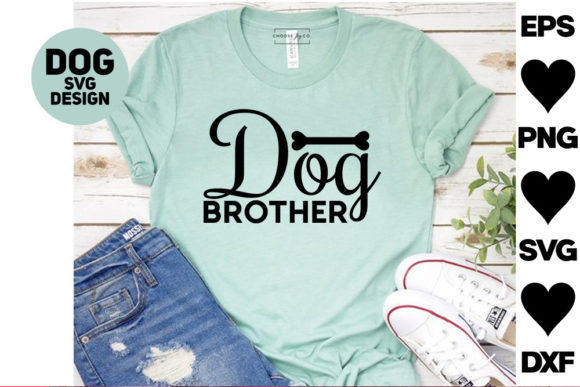
Dog Svg Design. Dog Brother
First Impression: Friendly, Simple, and Ready for Real Life
When I opened the ZIP folder for Dog Svg Design. Dog Brother, I wasn’t greeted with flashy animations or overdesigned flourishes—just clean, well-organized files: SVG, PNG, DXF, and EPS. That’s a good sign. As someone who’s digitized hundreds of dog-themed embroidery files—and stitched them onto everything from newborn onesies to boutique aprons—I immediately scanned the vector outline. What stood out was its gentle asymmetry: two stylized dogs sitting side by side, one slightly larger, heads tilted toward each other. It’s not cartoonish, not overly detailed, and definitely not fussy. The lines are smooth but intentional—no accidental sharp corners or stray anchor points. It feels like a design made *for* stitching, not just screen display.
Where This Design Naturally Lives
I recently used Dog Svg Design. Dog Brother as the centerpiece for a custom embroidered tote bag for a local pet rescue’s volunteer appreciation day. We chose natural canvas—medium weight, lightly textured—and paired it with soft heather gray thread. The result? Warm, approachable, and unmistakably handmade. That’s the sweet spot for this design: personalized gifts, small shop merchandise, and custom apparel where charm matters more than complexity. It reads beautifully on sweatshirt cuffs, baby blanket corners, tea towel hems, and even reversible patches sewn onto denim jackets. Because it’s balanced—not too tall, not too wide—it scales well across hoop sizes without losing legibility.
What Works Without Extra Effort
- Tote bag design: Stitches cleanly on medium-weight canvas with light tear-away stabilizer.
- Baby embroidery: Soft curves and open negative space mean fewer dense fill stitch areas—ideal for delicate fabrics like interlock knit.
- Holiday embroidery: Paired with red-and-khaki thread on a cream linen pillow cover, it read as cozy and timeless—not seasonal, but warmly human.
- Etsy seller asset: The included PNG makes quick mockups effortless; I dropped it into a printable mockup of a unisex crewneck and got three pre-orders before uploading the listing.
Where You’ll Want to Pause and Plan
This isn’t a “drop-in-and-stitch” file for every surface. Its friendly simplicity hides subtle considerations. On stretchy fabric like cotton jersey tees, I recommend basting or using cutaway + topping—especially around the dogs’ ears and paws, where fine lines meet curves. On dark fabric, test contrast early: the design’s moderate line weight holds up well in white or ecru thread, but avoid pale yellow or light gray unless you’re adding a fabric underlay. And while it’s labeled under T-Shirt Designs, don’t assume it’s optimized for ultra-thin blanks—the lack of intricate interior detail is a strength, but also means it won’t carry visual weight on oversized chest placements without thoughtful thread choice or background fill.
Design Assets That Support, Not Complicate
The inclusion of SVG, EPS, DXF, and PNG gives real flexibility. I used the SVG to resize for a 4" hoop patch (no distortion), then pulled the PNG into my embroidery software’s preview mode to check stitch density distribution before digitizing. No surprises—no overlapping paths, no hidden layers. That’s rare. Many Graphics-category files look sharp on screen but unravel during conversion. Not this one. It respects the boundary between digital art and machine embroidery design: it’s a starting point—not a finished stitch file—but one built with intention.
How It Shapes Customer Trust and Brand Voice
As a craft business owner, I’ve learned that customers don’t buy “dog designs.” They buy connection. When a parent orders a onesie with Dog Svg Design. Dog Brother, they’re not just getting embroidery—they’re getting a quiet nod to loyalty, companionship, shared mornings and muddy paws. That emotional resonance lifts perceived value. I’ve seen repeat buyers specifically ask for “the brother dogs” design again—by name. That kind of recall only happens when a digital embroidery file feels cohesive, consistent, and human-made. It supports brand consistency without demanding rigid color palettes or sizing rules. You can embroider it in navy on oatmeal linen for a boutique apron, then switch to charcoal thread on black organic cotton for a men’s cap—and it still reads as part of the same thoughtful collection.
Practical Embroidery Designer Notes
- Always test on scrap fabric first—especially if using textured or stretchy materials.
- Check thread color contrast on both light and dark backgrounds before finalizing your product photo.
- Review stitch density visually in your embroidery software—not just the count. This design avoids heavy fill stitch clusters, but verify how the dogs’ muzzles and shared space render at your target size.
- Confirm hoop size compatibility. While scalable, it performs best between 3.5"–5" hoops for clarity and balance.
- Inspect small details like ear tips and paw outlines—they’re crisp but not fragile. Still, avoid pushing below 2.75" without re-digitizing.
- Test in black-and-white mockups to ensure readability for screen-printed or hybrid product listings.
- Use proper stabilizer: light cutaway for knits, tear-away for stable wovens, and optional topping for napped surfaces like fleece.
- Confirm licensing terms before selling finished items or reselling the digital file—this ZIP contains source formats, not usage rights.
Final Thought: A Design That Serves the Maker First
Dog Svg Design. Dog Brother doesn’t shout. It leans in. It’s the kind of embroidery file that earns repeat use—not because it’s trendy, but because it’s reliable, emotionally grounded, and quietly versatile. Whether you’re stitching a single personalized gift or building a cohesive line of handmade product for your Etsy shop or local craft fair, it supports your voice instead of competing with it. In a market flooded with over-rendered, over-complicated graphics, this one reminds us that sometimes the most effective commercial embroidery is the simplest one done with care.