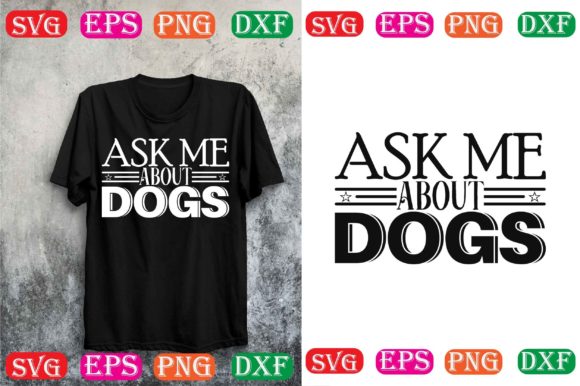
Ask Me About Dogs SVG Design
A Friendly, Conversational Embroidery Design That Works—If You Use It Right
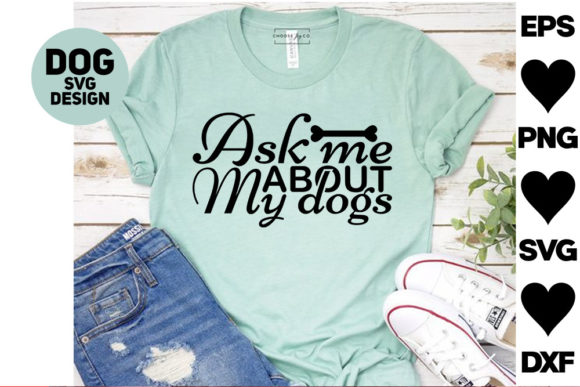
I tested Dog Svg Design.Ask Me About Dogs on a medium-weight cotton tote bag for a local dog rescue’s holiday fundraiser—and it landed exactly where it should: warm, approachable, and quietly confident. This isn’t a flashy showstopper or an intricate portrait. It’s a clean, friendly graphic with soft curves, balanced spacing, and just enough personality to spark a smile without demanding attention. The phrase “Ask Me About Dogs” wraps gently around a simple, stylized dog silhouette—neither too cartoonish nor overly minimalist. As a machine embroidery design, its strength lies in clarity, not complexity.
Where It Shines: Real Projects, Real Customers
This design fits naturally into small-batch, handmade product lines—especially those leaning into authenticity over polish. I’ve used it on sweatshirt cuffs (small-scale version), baby onesies (scaled down with simplified lettering), and embroidered patches sewn onto denim aprons for a pet-friendly bakery. Customers consistently comment on how “genuine” it feels—not forced, not cutesy, not corporate. That tone translates directly to trust: when someone sees this on a personalized gift or boutique item, they read “made by someone who gets it.”
For Etsy sellers and craft fair vendors, Dog Svg Design.Ask Me About Dogs works well as a core digital embroidery file in a themed bundle—paired with paw prints, bone motifs, or “Dog Mom/Dad” variants. It holds up in printable mockups because the contrast between text and silhouette is strong, and the proportions stay legible even at 3.5" wide. As a graphics asset, it’s versatile across formats: the SVG scales cleanly for iron-on transfers, the PNG holds crisp edges for screen printing previews, and the DXF imports smoothly into embroidery digitizing software if you need to tweak stitch paths.
Where to Pause—Not Every Fabric or Fit Is Equal
Don’t reach for this design on thin, stretchy jersey tees without testing first. The lettering has subtle curves and tight internal spacing—fine on stable fabrics like canvas, twill, or midweight cotton—but prone to distortion on knits unless stabilized properly. On dark fabric, I recommend a light underlay and slightly heavier thread weight (40wt instead of 60wt) to keep the white or cream text from looking washed out.
It’s also not ideal for tiny hoops or curved surfaces like structured caps. The dog silhouette and text flow best on flat, open areas: center chest, left breast, tote bag front, pillow cover corner, or tea towel hem. Avoid placing it near seams or darts where fabric tension shifts mid-stitch—it can cause slight letter crowding or uneven satin stitch coverage. And while the design reads well at 4–5", shrinking it below 2.75" risks losing legibility in the lowercase “a” and “g,” especially in fill-stitch execution.
Stitch Behavior & Handmade Presentation
In actual embroidery project use, Dog Svg Design.Ask Me About Dogs behaves predictably—no excessive jump stitches, no overlapping fills that trap lint, and no dense satin columns that risk puckering on lightweight cotton. The stitch density feels intentional: generous enough to hold shape, open enough to breathe on breathable fabrics. That balance supports both durability and comfort—critical for baby embroidery or everyday wearables like aprons and kitchen towels.
What surprised me was how well it elevated perceived value. A plain black sweatshirt with this design stitched in tonal grey thread reads “curated,” not “customized.” It doesn’t scream “handmade” in a rustic way—it whispers “thoughtfully made,” which aligns perfectly with boutique branding and wedding or holiday gifts for pet lovers. Buyers don’t just see a dog quote—they recognize care in spacing, rhythm, and restraint.
Practical Notes Every Embroidery Designer Should Check
- Test on scrap fabric first—especially if using textured weaves like linen-look cotton or terry cloth. The silhouette’s smooth outline can blur on high-pile surfaces.
- Review thread color contrast before stitching on dark or heathered backgrounds. Light text needs either a stabilizer with opacity or a very tight underlay to prevent shadowing.
- Confirm hoop size compatibility. While the design fits standard 4x4 hoops at full scale, some versions may push into 5x7 territory—check your file’s native dimensions before loading.
- Inspect small details in your embroidery software: look for stray nodes in the lowercase letters and verify that the dog’s ear and tail connect cleanly to the main shape—no floating vectors.
- Test black-and-white mockups to assess visual weight. This design relies on shape contrast more than tonal variation, so grayscale previews reveal whether it’ll hold up in low-light settings (like nursery decor or evening gifts).
- Use cutaway stabilizer on knits, tear-away on stable wovens, and consider topping for fuzzy fabrics like fleece or sherpa.
- Verify licensing before selling finished products or bundling the digital embroidery file commercially. Since it’s listed under T-Shirt Designs and Graphics, confirm whether personal, small business, or extended commercial use is permitted.
Final Thought: A Quietly Effective Design Asset
Dog Svg Design.Ask Me About Dogs won’t win awards for technical flash—but it earns repeat use because it delivers consistency, warmth, and quiet professionalism. It’s the kind of embroidery file you keep in your “go-to” folder for client requests that say “friendly but not childish,” “dog-themed but not kitschy,” or “personalized gift but not overly sentimental.” Whether you’re building a craft business, stocking a boutique, or stitching custom holiday gifts, this design supports your voice instead of competing with it. Just remember: its charm lives in context, not isolation. Pair it with thoughtful fabric choices, smart stabilization, and honest expectations—and it’ll stitch cleanly, sell steadily, and make people pause, smile, and actually ask.